 DERNIÈRE SORTIE : FRUITY DURBAN
 Centre de support
 Contactez-nous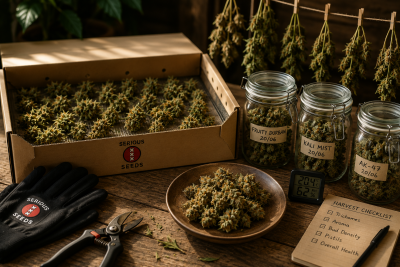
Harvesting cannabis is the process of cutting down your cannabis plants, drying, and curing the buds to prepare them for consumption. Timing is crucial in harvesting to ensure the highest potency and best flavor.
Now:
You've spent weeks nurturing your plants through veg and flower. The harvest is where all that work pays off—or gets ruined. In this guide we cover every step from recognizing maturity to long-term storage, including the mistakes that cost growers quality every single harvest.
Table of Contents
Signs of Cannabis Maturity: When Is It Ready?
To determine the right time to harvest, you should look for signs of maturity in your cannabis plants:
- Trichome Color: Check the trichomes under a magnifier. Harvest when they change from clear to milky white.
- Pistil Color: Observe the color of the pistils. They should turn from white to a reddish-brown.
- Leaf Changes: Older leaves will begin to yellow and die off as the plant matures.
Two Methods Compared: The pistil method (easy) tells you the plant is roughly done. The trichome method (precise) lets you fine-tune the effect. Cloudy trichomes = more uplifting. First amber trichomes appearing = peak potency. Mostly amber = heavier, sedating stone.
Simon's Recommendation: The easiest method: when all (or almost all) the white pistils have changed colour to orange/brownish, the plant is at the end of its life cycle. Towards harvest the biggest and lowest leaves will often also turn colour, yellowish, sometimes reddish—very comparable to autumn colors. This is another sign of being about ready, and nothing to worry about.
Preparing for Harvest: Flushing and Tools
Before harvesting, you should:
- Flush the Plants: Stop feeding nutrients and only give water. This process removes excess nutrients from the plants.
- Choose the Right Tools: Gather sharp scissors or shears, gloves, and containers for the harvested buds.
Simon's Pre-Harvest Technique: Turn the lights off 72 hours before harvest. Without light, plants cannot produce new glucose and will consume the starch stored in leaves and buds. Starch causes sore throat and black ashes when smoking—this simple step produces a noticeably smoother smoke. You can also place plants in distilled water with a few drops of phosphoric acid to keep the stomata open and further reduce chlorophyll.
Harvesting Techniques: Whole Plant vs Partial
- Whole Plant Harvest: Cut the entire plant at the base.
- Partial Harvest: Harvest only the top mature buds and leave the lower ones to mature further.
- Wet vs. Dry Trimming: Decide whether to trim the buds before or after drying.
Outdoor Timing Tip: When all pistils have changed color outdoors, the plant could be harvested. But if the weather is still very sunny, you could leave the plants a bit longer—the sun will add more weight. Harvest at the end of the last sunny day before weather change. If the weather turns bad with rain and winds, harvest right away to avoid bud rot.
Drying Cannabis the Right Way
Hang the branches upside down in a controlled environment with good air circulation.
Simon's Drying Method: Dry them slowly after harvest. The first week the enzymes in the plants stay alive and they will break down starch. Keep them hanging in the dark without much ventilation to keep moisture present in the plants and keep the enzymes working. Not in a fully closed small closet—keep it a bit open to let moisture escape, but do not use blowing fans. Aim for about 14 days of hang-drying. Do not clip the buds off if they are still a bit too wet—fungus can attack then.
Critical Warning: Fast drying destroys quality. If you rush this stage with fans or high heat, you kill the enzymes that break down harsh-tasting starch and chlorophyll. There are no shortcuts—patience here directly determines smoke quality.
Curing Cannabis for Maximum Flavor and Potency
Place the dried buds in airtight containers. Open the jars periodically to let out moisture and fresh air in.
Simon's Curing Tip: Use a cardboard box (the typical 3-layered supermarket kind) instead of glass jars. Place trimmed buds inside with space above them and keep the box closed. The cardboard allows bad gases to escape naturally—no need to "burp" like with glass jars. This is simpler and less risky for mold. Keep curing until ready to smoke.
Storage and Preservation
Store the cured cannabis in a cool, dark place. Use airtight containers to maintain freshness and prevent mold growth.
Storage Best Practice: After proper curing, cannabis can be stored for months without significant quality loss. Keep it away from light, heat, and humidity. A cool, dark cupboard works perfectly. If using jars for long-term storage, make sure the buds are fully dry first—any remaining moisture will cause mold in a sealed container.
Common Mistakes to Avoid
- Harvesting Too Early or Late: Pay close attention to the signs of maturity.
- Improper Drying Conditions: Avoid fast drying as it can degrade the quality of the buds.
- Neglecting Hygiene: Cleanliness is crucial to prevent contamination.
Simon's Warning: The #1 mistake is impatience. Harvesting a week early because you're excited, or fast-drying because you can't wait—both destroy quality that took months to build. The last 2 weeks of patience are what separate average weed from exceptional weed.
Legal Considerations
Always be aware of the legal status of cannabis cultivation and harvesting in your region. Comply with local laws and regulations.
Final Takeaway: Harvesting is not just cutting plants down. It's a multi-step process of timing, drying, and curing that directly determines the quality of your final product. Master the harvest and you master the grow.